
Mining Industry · Mining Sector
Net-Zero Targets Start with Boundary Decisions
A credible net-zero target for a mine does not begin with a headline. It begins with a boundary decision. For mining executives and sustainability officers, that distinction matters. A target that...
A credible net-zero target for a mine does not begin with a headline. It begins with a boundary decision.
For mining executives and sustainability officers, that distinction matters. A target that sounds ambitious but rests on uncertain data can create avoidable risk later: inconsistent reporting, weak internal confidence, and questions from leadership when the numbers do not hold up. A target that is built from the right boundary is more durable because it reflects what can actually be measured, verified, and improved over time.
Start with what is in scope now
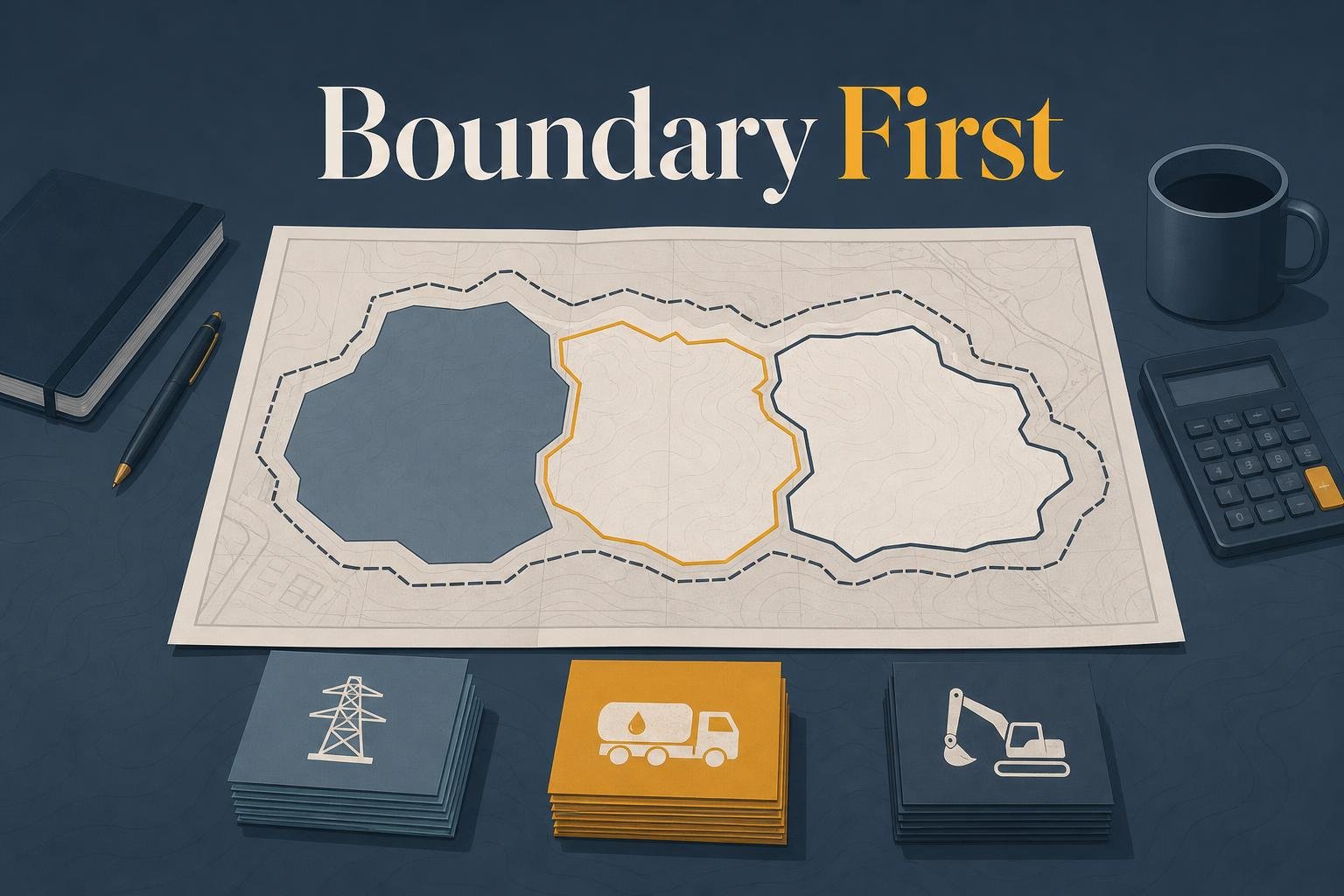
The most practical approach is to separate emissions into three parts: site operations, purchased electricity, and the largest supplier or transport categories. This structure keeps the target tied to the sources that are most visible and most controllable today. It also makes clear where the organization has strong data and where it still needs better information before making a firm commitment.
That does not weaken the target. It strengthens it. A net-zero pathway becomes more credible when it is anchored in operational reality rather than forced into a single, polished number that treats every category as equally certain.
For mines, this is especially important because emissions data often lives in different systems. Diesel may sit in one file, electricity in another, and contractor activity somewhere else entirely. When those sources are not aligned, the answer is not to ignore the gaps. The answer is to define the boundary carefully and publish the target only where the baseline is auditable.
Use the baseline as the test
Before any target is published, the baseline should be checked with the same discipline used for financial reporting. If the data behind diesel, power, and contractor activity does not sit at the same level of certainty, then the target should not pretend that it does. A credible baseline shows what is known, what is estimated, and what still needs to be improved.
This is where many organizations can strengthen their ESG strategy. Instead of waiting for perfect data across every source, we can set the target where the evidence is strong and pair it with a clear data-improvement milestone for the rest. That creates a practical path forward without overstating confidence.
Why leadership can defend this approach
A target built this way is easier to defend because it is transparent. Leadership can see which emissions sources are included now, which are deferred until the data improves, and why that decision was made. The result is not just a cleaner reporting structure. It is a more credible management decision.
For organizations working to meet ESG goals under scrutiny, credibility is a strategic asset. It supports better internal alignment, more disciplined carbon accounting, and stronger confidence in the net-zero roadmap.
At Carbomine, we believe the most useful net-zero work starts with disciplined boundaries and auditable baselines. That is how mining companies move from intent to defensible action. For organizations looking to structure that work, our approach is designed to support practical carbon accounting and target setting across complex mine operations. Learn more at Carbomine.
When the boundary is right, the target becomes more than a statement. It becomes a management tool that leadership can stand behind. For a closer look at how we think about credible mining decarbonization, visit our website.
