
Mining Industry · Mining Sector
Why Audit Trails Matter in Mining ESG Reporting
A useful audit trail starts before the number reaches the report. In mining, that principle is not a technical preference; it is a practical requirement for credible ESG reporting. When a diesel...
A useful audit trail starts before the number reaches the report. In mining, that principle is not a technical preference; it is a practical requirement for credible ESG reporting.
When a diesel emissions figure is copied from a site file into a spreadsheet and then edited again in email, the challenge is not limited to the final total. The larger issue is that no one can quickly see which version was approved, when it changed, or why. Without that visibility, reporting teams spend time reconstructing decisions instead of controlling them.
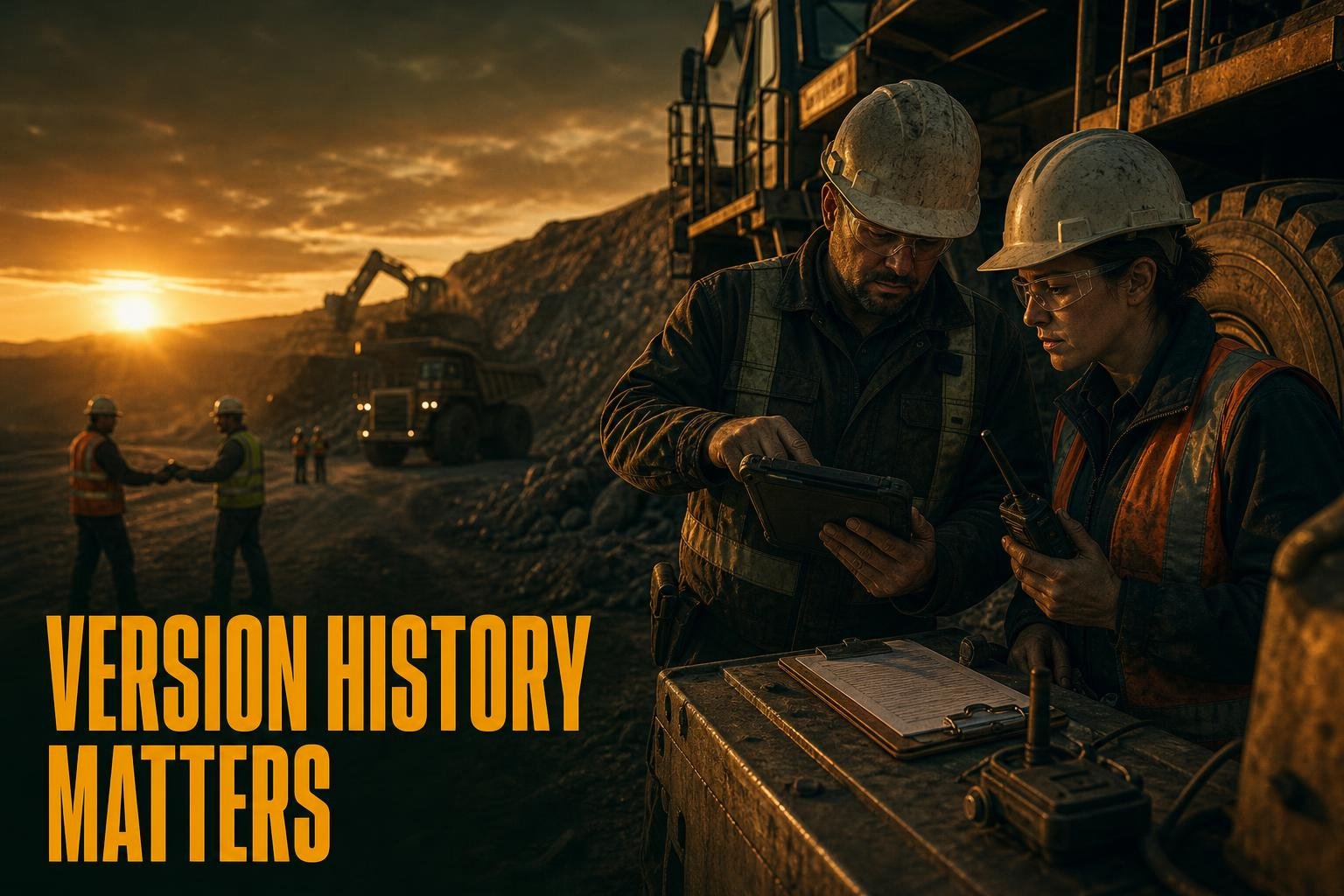
Why version history is part of the control environment
For ESG reporting, the real test is straightforward: can we trace each input back to its source, time of entry, and reviewer without rebuilding the story from memory? If the answer is no, review turns into cleanup. That is a weak control environment, and it creates avoidable pressure on sustainability, operations, and finance teams alike.
This is especially important in mining, where emissions data often moves across sites, contractors, and finance before it becomes a reported figure. Each handoff introduces the possibility of edits, reformatting, or confusion about ownership. The audit trail must follow the data as it moves, not sit outside the process as an afterthought.
At Carbomine, we focus on making every adjustment visible as data travels through the business. That means the reporting process does not rely on memory, side conversations, or manual reconstruction. It relies on a record that shows what changed, when it changed, and who reviewed it.
From spreadsheet workarounds to traceable reporting
Many teams still depend on spreadsheets because they are familiar and flexible. But flexibility becomes a liability when multiple versions circulate across email, shared drives, and local files. Once that happens, the final report may be accurate, yet the path to it is difficult to defend.
A stronger approach is to treat traceability as part of reporting design. Every edit, review, and approval should remain visible as data moves from site-level collection to final submission. That way, the team can answer questions quickly and consistently, rather than searching through old messages or comparing file versions.
This is not about adding bureaucracy. It is about reducing friction at the point where ESG reporting is most vulnerable: the transition from raw input to reported number. When the version history is clear, review becomes a control, not a cleanup exercise.
What mining leaders should expect from an audit trail
Mining executives and sustainability officers are under pressure to meet ESG goals while keeping reporting efficient and defensible. In that environment, an effective audit trail should do three things well: preserve the source of the data, show the timing of each change, and identify the reviewer responsible for approval.
That structure supports better governance and gives leadership greater confidence in the reported result. It also helps teams respond faster when a figure is questioned, because the evidence is already attached to the process.
For organizations working to improve carbon accounting discipline, this is a foundational requirement. Our view is simple: if the audit trail is incomplete, the reporting process is incomplete.
For more on our approach to traceable ESG data workflows, visit Carbomine. You can also explore how we think about mining data integrity and reporting readiness at our website.
In mining ESG reporting, confidence comes from more than the final number. It comes from being able to show how that number was built, step by step, with a clear record at every stage.
