
Mining Industry · Mining Sector
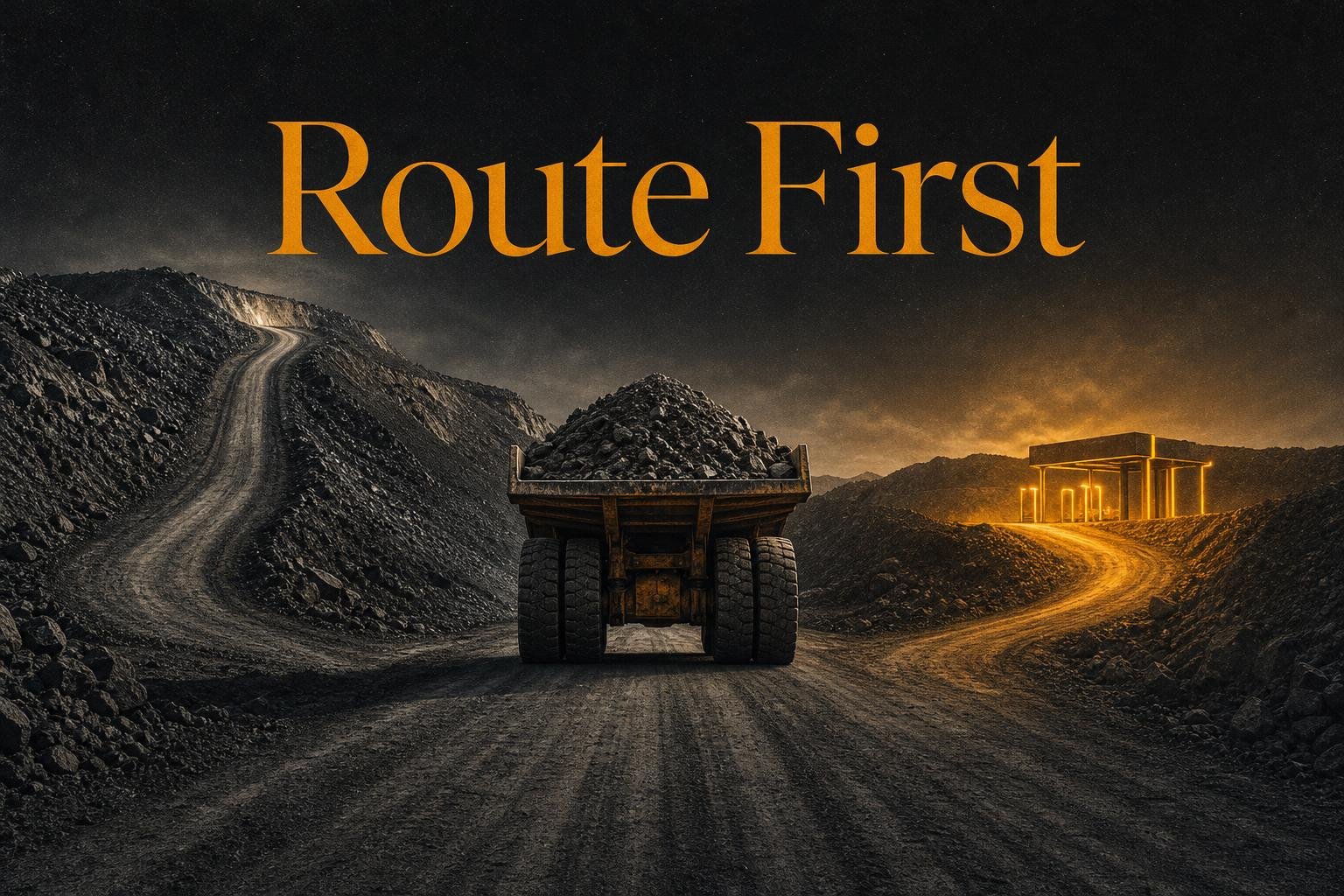
Why Haulage Decarbonisation Starts with the Route
When haulage emissions plans stall, the issue is often not the target. It is the route. Mining teams can set a credible diesel reduction ambition, build a strong electrification roadmap, and still...
When haulage emissions plans stall, the issue is often not the target. It is the route. Mining teams can set a credible diesel reduction ambition, build a strong electrification roadmap, and still miss the largest savings if the fleet strategy treats every corridor as if it behaves the same.
That is the practical challenge we see most often: a mine can have a sound plan on paper and still underperform in execution because the route-level details were never separated. Idle time, grade, payload cycles, and charging windows do not operate evenly across a site. They vary by corridor, and that variation determines whether a decarbonisation plan will translate into results.
Why route-level analysis matters
For mining executives and sustainability officers under pressure to meet ESG goals, broad fleet assumptions can be misleading. A site-wide diesel reduction target may look comprehensive, but the real opportunity is usually concentrated in one haul road, one operating pattern, or one emissions line. If we do not isolate those variables, we risk designing a solution around averages instead of actual operating conditions.
The more useful question is straightforward: which haul road has the longest idle time, the steepest grade, or the tightest charging window? Those are the conditions that shape energy demand and operational feasibility. They also reveal where electrification may be practical and where it may not yet fit the current operating rhythm.
Connecting emissions targets to operating reality
Electrification decisions become more actionable when we compare one corridor at a time against diesel runtime, payload cycles, and charging constraints. These three inputs need to align. If they do not, the plan may appear stronger on paper than it will perform in the field.
That is why route segmentation matters before truck class decisions are made. A corridor with manageable idle time and predictable cycles may support a different approach than a route with steep gradients and limited charging access. Without that distinction, the fleet plan can become too generalized to guide investment or implementation.
At Carbomine, we believe the most credible decarbonisation work starts with operational specificity. Our focus is not on rewriting the entire fleet strategy at once, but on identifying where the emissions case is strongest and where the operating constraints are manageable.
Start with one corridor, not a full fleet rewrite
Mining teams do not need a full fleet rewrite to begin making progress. The first step is smaller and more practical: one route, one operating pattern, and one emissions line that can be assessed together. That approach helps teams test assumptions early, reduce planning risk, and avoid overcommitting to a solution that does not match site conditions.
This is also where internal alignment improves. When operations, sustainability, and fleet planning are looking at the same corridor data, the conversation becomes clearer. The question is no longer whether decarbonisation is possible in theory. It becomes where the route supports it, where the constraints sit, and what operating changes are required.
For teams building a more credible pathway to lower haulage emissions, route-level clarity is often the difference between a plan that looks good and a plan that works. Carbomine supports mining organisations in turning that clarity into a practical decarbonisation approach. For more on our perspective, visit our website.
In haulage decarbonisation, the target matters. But the route determines whether the target can be reached.
